History
The history of Padstow
Known in Cornish as Lannwedhenek. The church enclosure of St Petroc, the saint who founded a monastery here.
Padstow's importance begins with water and faith. St Petroc arrived in the sixth century and founded a monastery, and the settlement that grew around it took his name. Lannwedhenek, the church enclosure. For centuries it was one of the most significant religious sites in Cornwall.
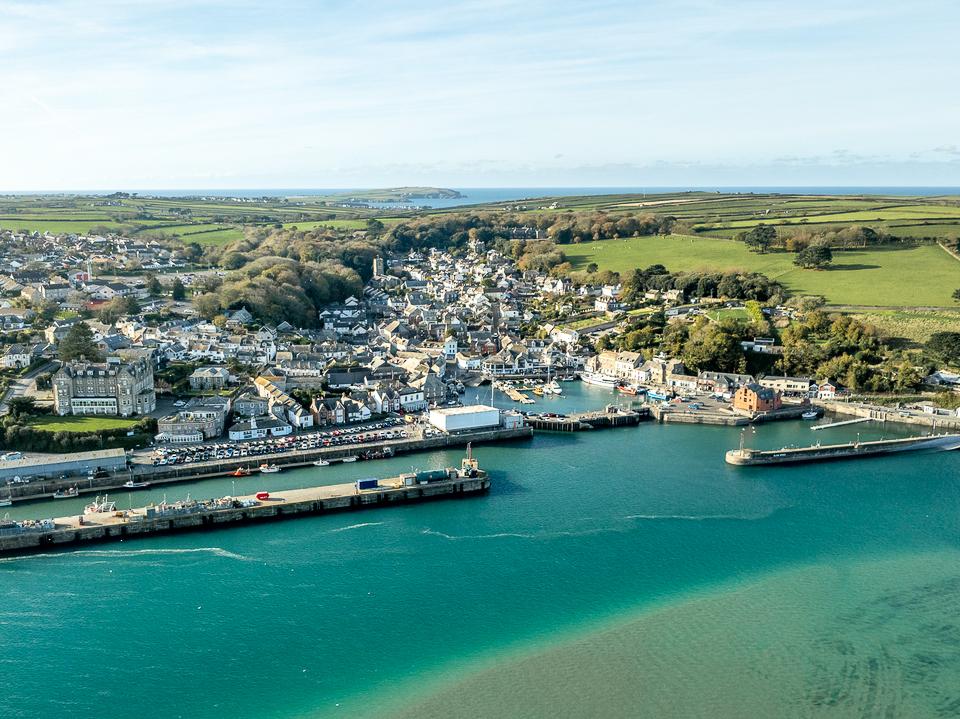
The harbour made the town. Sheltered inside the Camel estuary, Padstow became a working port trading with Ireland, Wales and beyond, and later a departure point for emigrants heading to North America and Australia. That prosperity is still visible in the merchants' houses around the quay.
The Doom Bar shaped its limits. The shifting sandbar at the estuary mouth has claimed an extraordinary number of ships, and it prevented Padstow from ever growing into a deep-water port on the scale of Falmouth.
The railway arrived in 1899 and transformed the town into a destination. When it closed in 1967 the line might have been the end of Padstow's tourism, instead the trackbed became the Camel Trail, and the town reinvented itself again around food, with the restaurant trade now as central to its identity as fishing once was.
People and stories
The 'Obby 'Oss
A May Day celebration with roots far older than the Christian calendar, when the town splits into Red and Blue and dances the Oss through the streets from midnight.
St Petroc
One of Cornwall's most important early saints, whose monastery gave the town both its Cornish name and its long religious significance.
Doom Bar
The sandbar across the Camel estuary that has wrecked hundreds of vessels, and by local legend was cursed into being by a dying mermaid.